Client work
What Co-Designing Taught Me About Accessibility
Accessibility problems often look simple at first glance, until you start speaking to the people who live with them every day
Pradnya Nirgun
10 mins read
Share this:
My design journey has taken a slightly unusual path. I started out studying product design, where much of our work focused on physical objects, thinking about materials, ergonomics, and how something behaves once it leaves the studio and enters the real world.
But when I entered the industry, my work gradually shifted into UX/UI design. Over time, my practice became centred around digital products: designing interfaces, prototyping flows, and iterating quickly based on feedback.
Digital design operates in a relatively controlled space. Screens are predictable and interactions are contained. When something doesn’t work, you can adjust it and release an update quickly. Physical products, on the other hand, are less straightforward. This project brought me back to that kind of design challenge.
Through the Inclusive Inquiry project between 55 Minutes and Salvage Garden, our team explored mobility challenges faced by wheelchair users and their caregivers during rainy conditions in Singapore. While rain is frequent and often sudden here, solutions that adequately protect wheelchair users remain surprisingly limited.
At first, the challenge seemed straightforward: How might we design a rain protection system that is accessible and adaptable for everyday wheelchair use?
But once we began speaking with caregivers and observing real journeys, the problem revealed layers we hadn’t anticipated. Rain wasn’t just about staying dry, it also intersected with visibility, safety, navigation, and the physical effort already required to move through public spaces.
At 55 Minutes, we believe strongly in involving users in the design process because they are the experts of their own problems. In this project, that meant moving beyond interviews and feedback sessions to involve caregivers in prototyping.
Over time, my role shifted. Instead of trying to design the solution myself, the more important task became engaging users into the process. Caregivers and wheelchair users weren’t just research participants, they became our co-designers, shaping ideas and helping us understand what would actually work in real life.
Looking back, the project taught me far more about accessibility and co-creation than I expected. Here are some reflections from that experience.
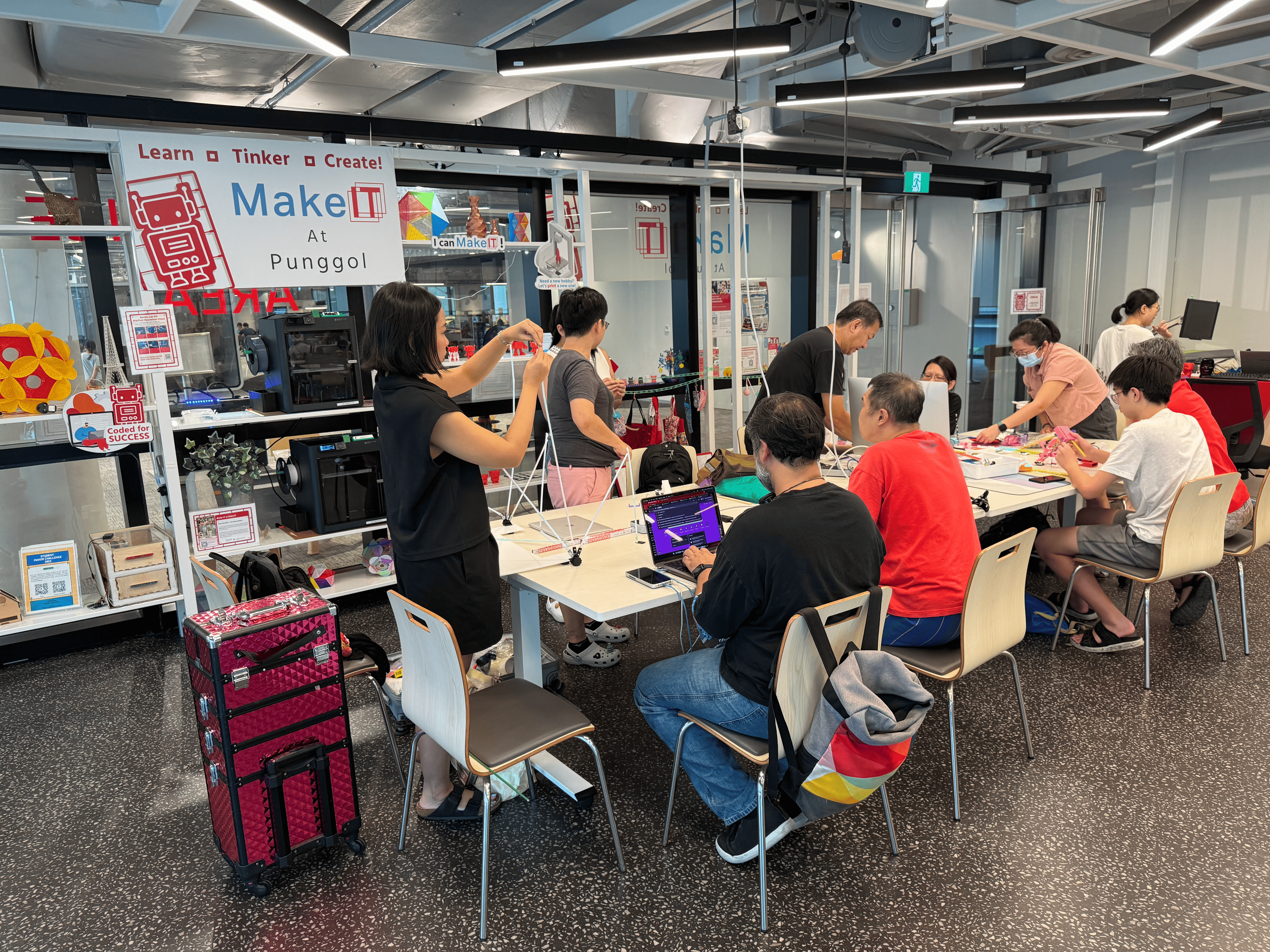
A prototyping session with the participants
Reflections from Co-Designing for Accessibility
Context is everything in accessibility design
Accessibility problems are rarely isolated problems
At the start of the project, the challenge seemed straightforward: rain protection. But once we began speaking with caregivers and observing real journeys, it became clear that rain was only one layer of the issue. Navigating public spaces already requires constant effort which includes managing slopes, uneven pavements, crowded walkways, and the physical strain of pushing a wheelchair. Rain simply amplified these already existing challenges.
Co-designing with caregivers helped us see that accessibility problems are rarely isolated. A solution that only addresses one factor, such as rain coverage, can unintentionally create new problems in visibility, mobility, or safety. Designing for accessibility therefore means understanding the entire context of use, not just the immediate problem.
There is no “average user” in accessibility
Working with wheelchair users challenges the idea of designing for an “average” person. Wheelchairs differ in size, structure, and configuration. Users have different postures, mobility needs, and comfort thresholds. Caregivers themselves vary in height, strength, and experience. A solution that works well for one setup can fail completely for another.
Co-designing with different participants made this diversity very visible. Instead of aiming for a perfect one-size-fits-all solution, the more realistic goal became designing for safety, adaptability, coverage and ease of use, as these were the top common pain-points for all of them even though different participants had different needs.
Accessibility reveals hidden complexity in everyday environments
Before this project, rain felt like a relatively simple inconvenience. But through field observations and conversations with caregivers, it became clear how many other environmental factors influence mobility. Slopes, narrow walkways, uneven pavements, crowded spaces, and limited visibility during bad weather. What seems like a small obstacle can quickly escalate when multiple constraints overlap.
Accessibility design often reveals these hidden layers. By working closely with users, we begin to see the everyday environment through a different lens.
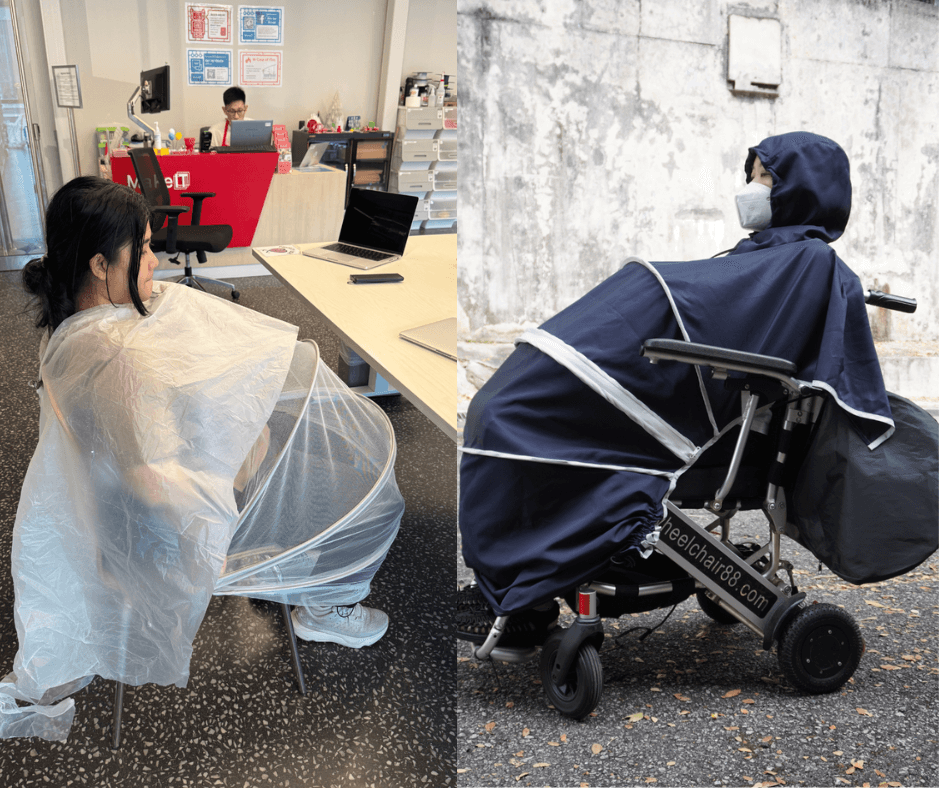
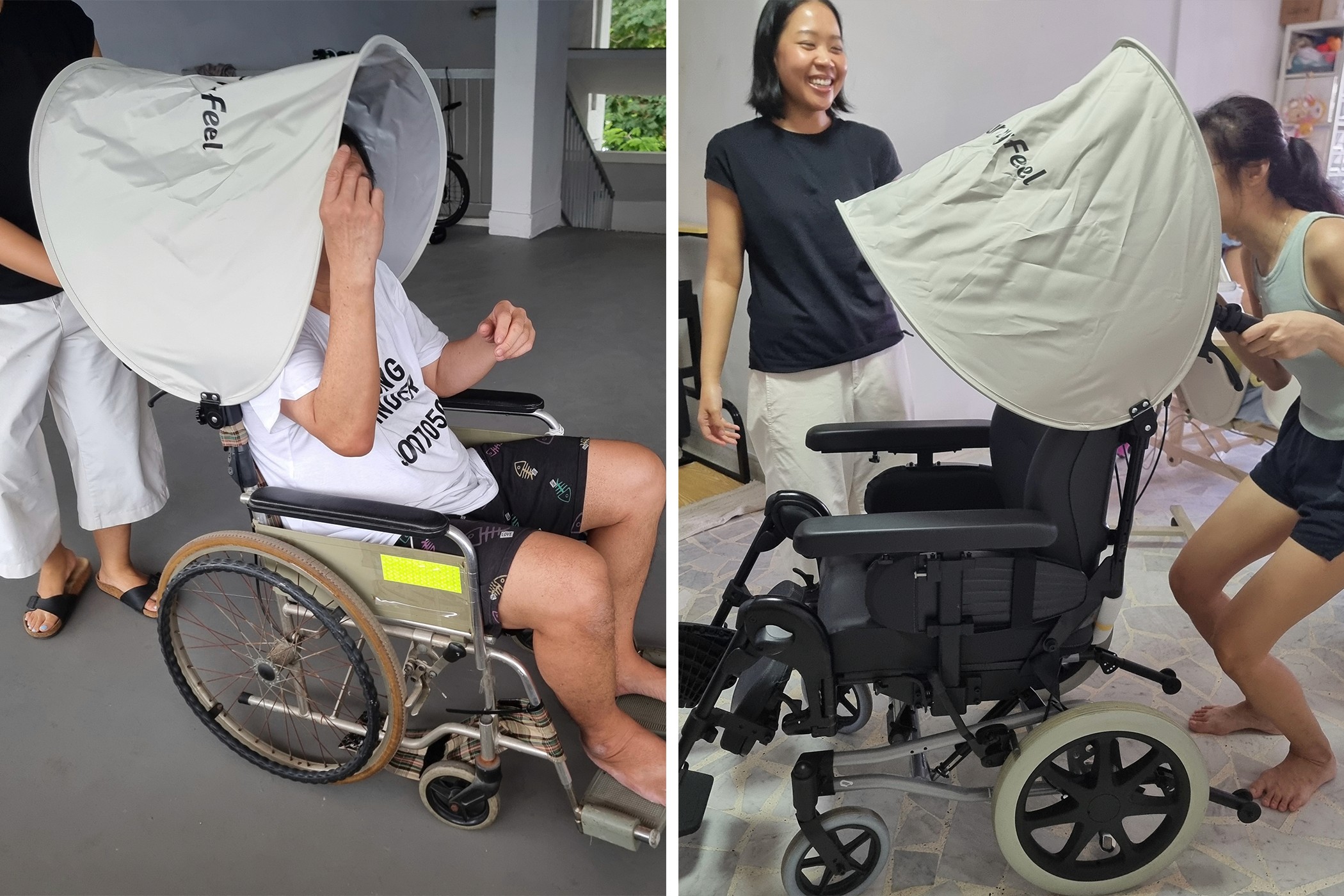
Left-hand side is the lo-fi prototype and on the right is our refined hi-fi prototype
2. Better solutions come from designing with, not for
Lived experience reveals constraints designers often miss
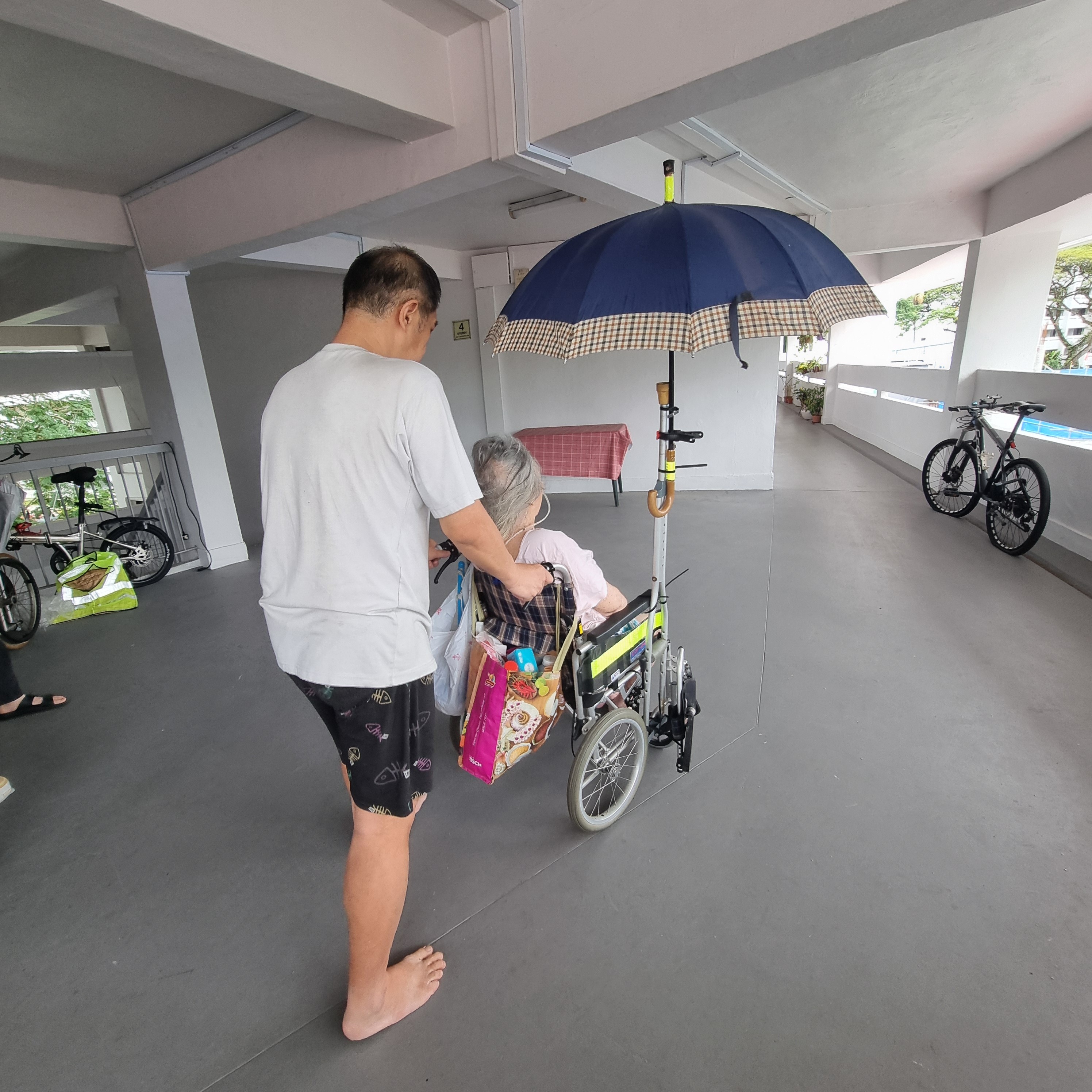
Many of the most important insights in this project came directly from caregivers. For example, umbrellas are usually the most common rain solution but for these users, they were often blocking the caregiver’s line of sight while pushing a wheelchair.
“When you're pushing the umbrella with the wheelchair, you can't see! There's this mushroom in front of you... you can't even navigate." - Brenda, a caregiver
What initially appears to be a practical workaround can actually create safety risks when navigating slopes or crowded pathways. These kinds of constraints are difficult to identify from the outside. They only become visible when people share their lived experiences.
Co-designing reminded me that the people living with accessibility challenges often understand the problem space more deeply than designers ever could through research alone.
Workarounds are signals of unmet design needs
During our research sessions, caregivers rarely started by explaining the problem directly. Instead, they showed us what they were already doing to cope. Some had improvised plastic rain covers, modified umbrella holders, or made small adjustments to stabilise accessories on wheelchairs.
These DIY solutions were not perfect, but they were important signals. They showed where existing products were falling short and what kinds of needs people were trying to address themselves.
Co-designing helped us treat these workarounds weren’t just temporary fixes, but also valuable starting points for understanding the problem. It even gave us some inspiration during our prototyping sessions.
Co-designing shifts the role of the designer
In many design processes, users are invited in at specific checkpoints like interviews, testing sessions, or feedback stages. But in this project, involving caregivers in prototyping changed that dynamic. Instead of responding to ideas we had created, they helped shape the ideas as they were being developed. Their feedback influenced the direction of prototypes in real time.
This shifted my role as a designer. Rather than being the primary generator of solutions, my role became facilitating discussions, interpreting insights, and translating them into practical design decisions. Co-designing required a mindset of listening first, designing second.
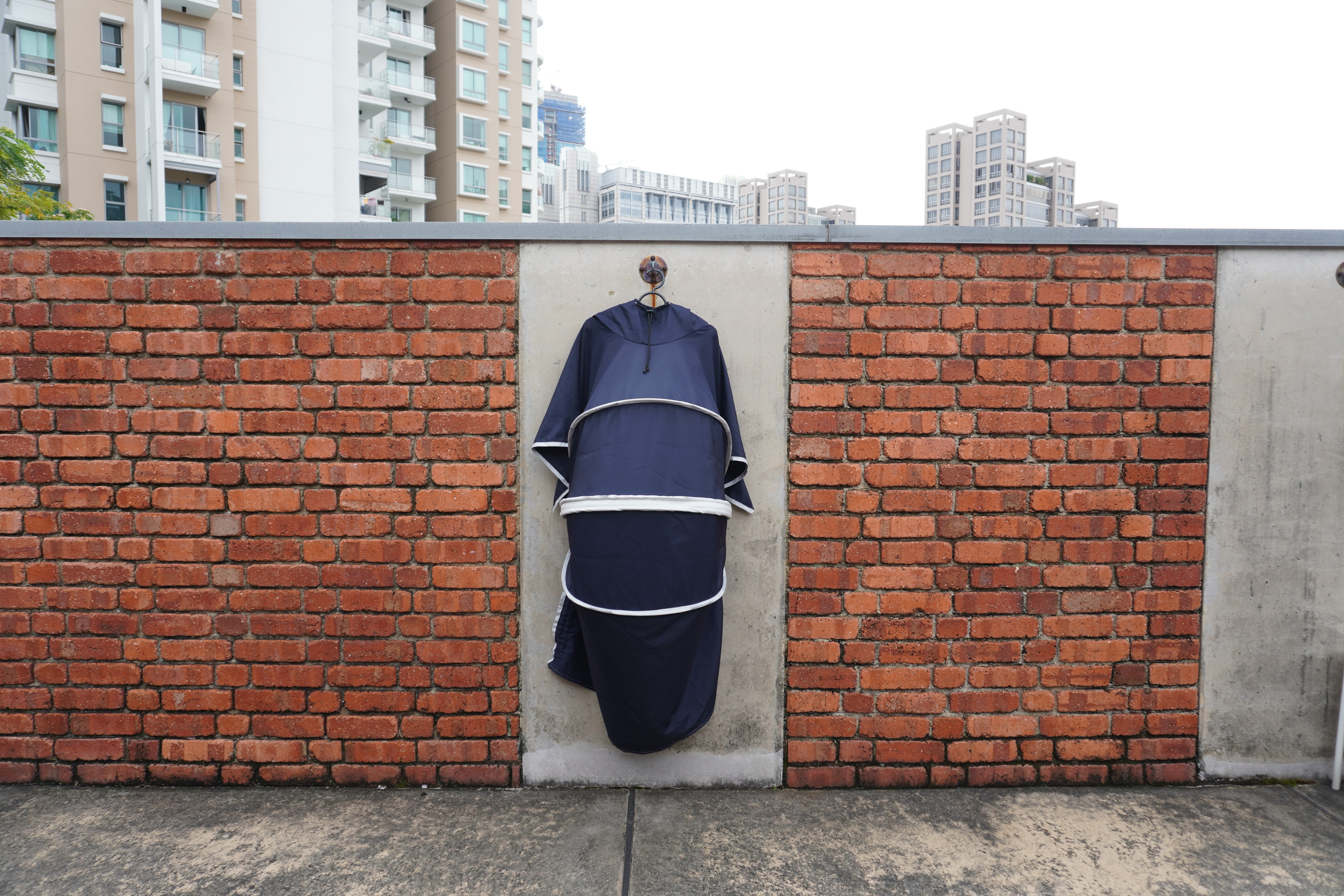
Our final version! For now
3. Prioritising the right things, over doing everything
Simplicity matters more than sophistication
Throughout the project, the caregivers who co-designed with us consistently prioritised ease of use. If a solution required too many steps to set up, adjust, or dismantle, it quickly became impractical for everyday situations. In unpredictable environments, simplicity becomes essential.
Co-design sessions reinforced that accessibility solutions should reduce effort, not add to it. Sometimes the most valuable improvement is simply making something clearer, faster, and easier to use.
Constraints can actually strengthen accessibility design
One of the realities of the project was that the solution needed to remain affordable and use materials that were easy to source locally. At first this seemed limiting. But it helped ground our thinking in practicality rather than complexity.
Looking at everyday products and adapting their principles became a useful approach. We even used a skeleton from a baby stroller cover as our base for our solution. These constraints pushed us toward solutions that were realistic to build, maintain, and replace.
Accessibility design is not just about innovation, it is about creating solutions people can realistically adopt.
Accessibility design is ultimately about balance
Early in the project, we tried to solve so many things at once like coverage, ventilation, portability, adaptability, and ease of setup. But through co-design and testing, we realised that these goals often conflict with each other. For example, increasing coverage can lead to overheating, while adding structural elements can reduce portability.
Caregivers consistently prioritised safety and ease of use above all else. Their input helped us focus on balancing the most critical needs rather than trying to maximise every feature.
Accessibility design often involves trade-offs. Co-design helps ensure those trade-offs reflect real priorities rather than designer assumptions.
Closing reflection
Looking back, this project reminded me that accessibility design is rarely about solving a single problem. It is about understanding the broader system that people operate within - their environments, routines, limitations, and priorities.
Co-designing with caregivers and wheelchair users made this especially clear. Many of the insights that shaped our decisions didn’t come from our initial ideas, but from the lived experiences shared during conversations, prototyping sessions, and testing.
As designers, we often feel responsible for coming up with the right solution. This project shifted that perspective for me. The more valuable role was often creating the conditions for the right insights to emerge, which was often inviting users into the process, listening carefully, and translating what we learned into practical design decisions.
Accessibility design requires humility and open-mindedness. It asks us to recognise that the people living with these challenges every day often understand the problem far better than we do. Co-designing, when done thoughtfully, allows that expertise to guide the design process.
And to me, the co-design sessions were quite a valuable journey which led to a meaningful outcome.
—
If you would like to know more about the project, check out our report. Adeline, our lead designer at 55 Minutes wrote about the challenges and rewards of designing a physical product (the wheelchair poncho) in this blog post.
Do you
like
Share it with your friends!
https://55mins.com/blog/what-co-design-taught-me-about-accessibility
Copy link
Copied