Team culture
What a Tour of Punggol Library Taught Me About the Curb-cut Effect
Adeline Kuswanto
8 mins read
Share this:

I recently attended Intersections, a two-day gathering that brought together service design, innovation and cross-sector practitioners. The second day closed with a set of learning journeys we could choose from, and the National Library Board's Punggol Regional Library was on the list.
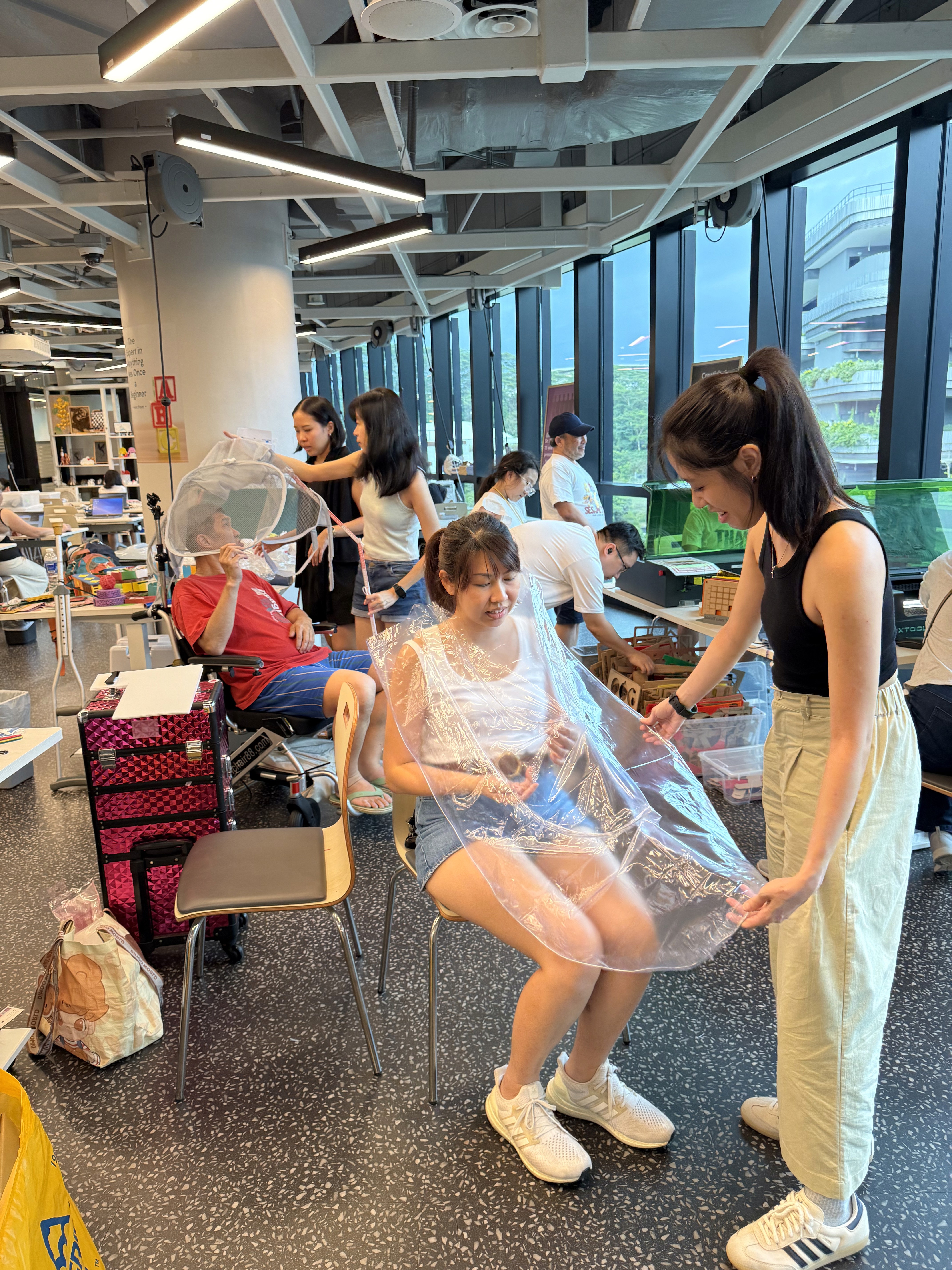
I'd like to think I already knew the building. For two months we had been going back and forth to Level 4, where Salvage Garden runs its assistive technology makerspace out of MakeIT @ Punggol. We were there for the Wheelchair Poncho, a project under Inclusive Inquiry, our pro bono programme that takes problem statements from organisations working with persons with disabilities so we can help them prototype a solution.
I chose the journey anyway, because I wanted to hear how NLB used co-creation to design the library's accessible features. 55 Minutes is an accessibility-focused UX design studio, so how a team involves disabled people in the design process, and how early, is close to our daily work.
Punggol Regional Library opened in April 2023 as NLB's first fully inclusive library, under the LAB25 blueprint and its goal of making libraries an equaliser, and the team was clear that the accessible features exist because they were designed with the disability community rather than for it. The same approach carries into the programming, through workshops that build skills within the community and sessions that help other patrons understand it.
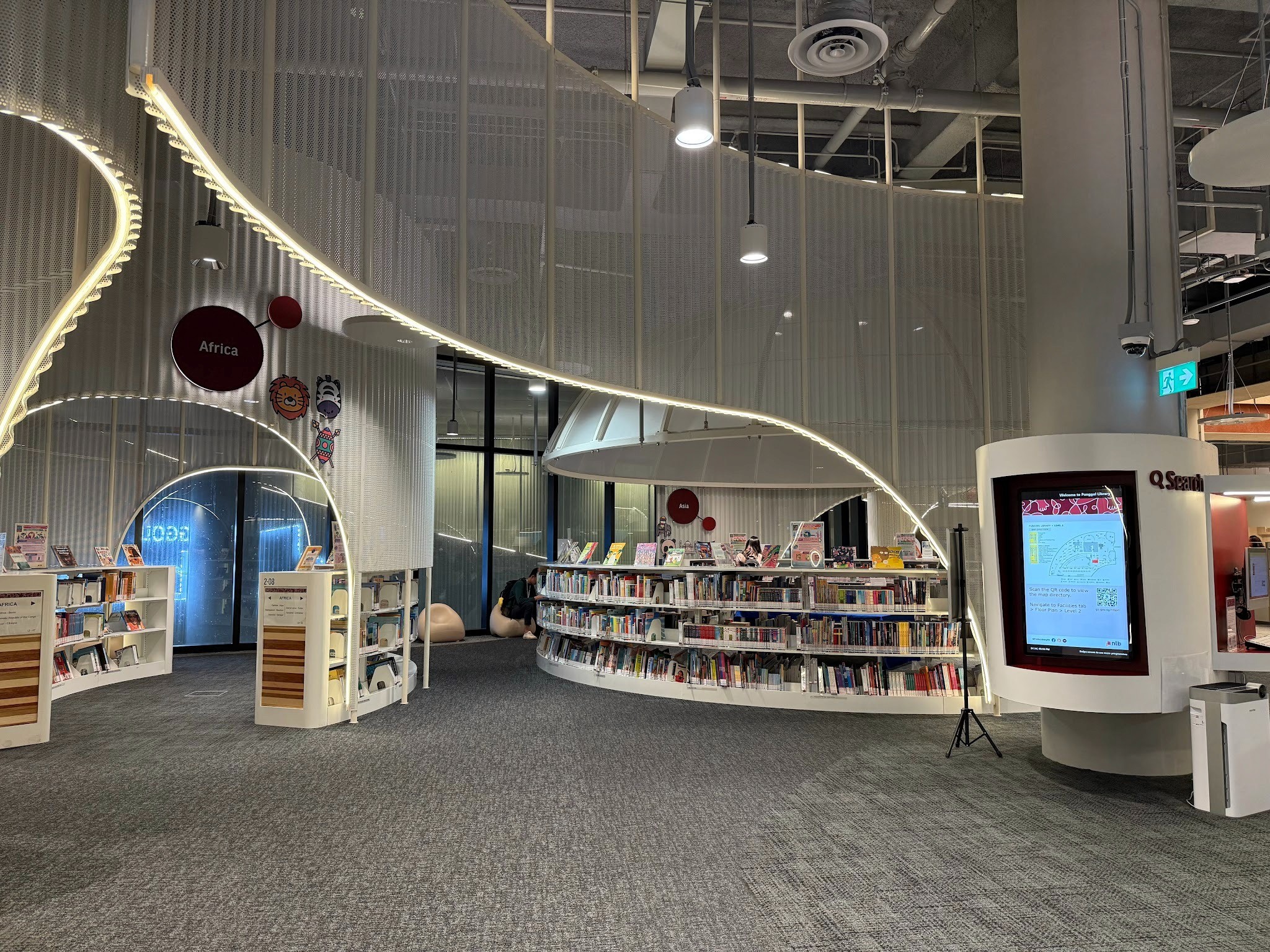
Interior view of Punggol Regional Library, featuring lower shelves and a digital wayfinding map.
During the tour, Keisha, an Accessibility Manager in NLB's Equaliser Office who was showing our group around, mentioned how designing for accessibility has benefited other patrons who were not the original intended users.
There is a name for this. Angela Glover Blackwell called it the curb-cut effect in 2017, writing about the ramps cut into pavement corners. Those ramps exist because disabled activists in Berkeley campaigned for them through the 1970s, at one point pouring their own concrete at night. The people using them most today are parents pushing prams, tourists wheeling luggage and delivery riders hauling trolleys. When you design well for a specific group at the margins, the benefit tends to spread past them.
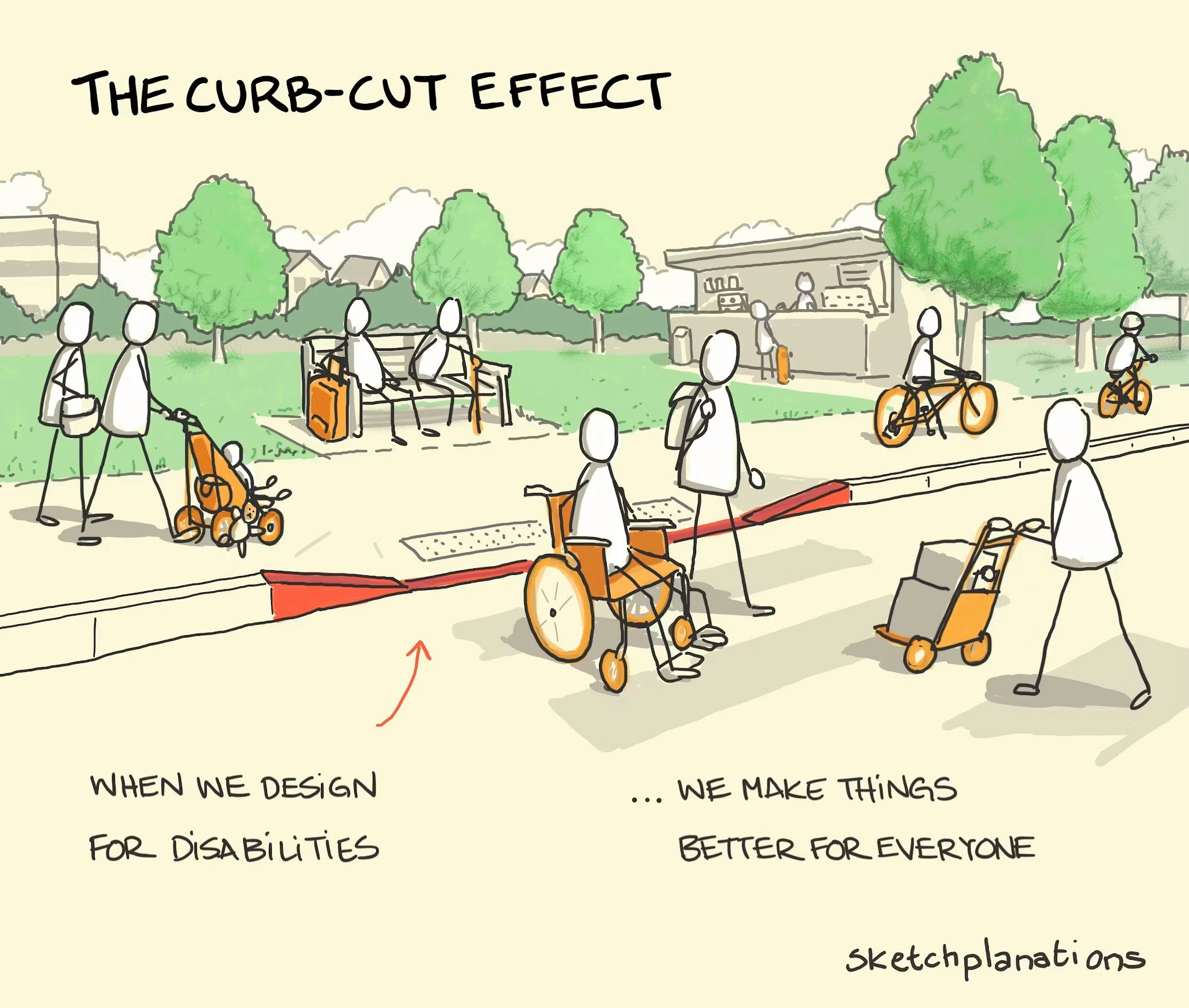
The curb-cut effect, as illustrated by Sketchplanations, shows how designing to benefit disadvantaged or vulnerable groups can ultimately benefit society as a whole.
The co-creation behind these features took years. NLB set up a Persons with Disabilities Advisory Committee in 2019, made up of people from organisations working across different disability fields, and has engaged more than 500 persons with disabilities and their caregivers since 2018 to understand what libraries were getting wrong. Here are some of the features that came out of that work and have since extended past their intended user group.
Calm Pods. Punggol Regional Library is the largest public library in Singapore, and a space that size comes with a lot of activity, sound and movement. That can be overwhelming for a patron with autism. The Calm Pods are enclosed, quiet spaces where someone can step out of the activity and settle before carrying on with their visit. Keisha let us sit in one, and there was something about the padded walls, the sensory aids and the toys that I found unexpectedly soothing. We heard from her that some of the patrons using them now are working adults who come in after a difficult day and want somewhere quiet to sit before going home. It is the same need the pods were designed around.
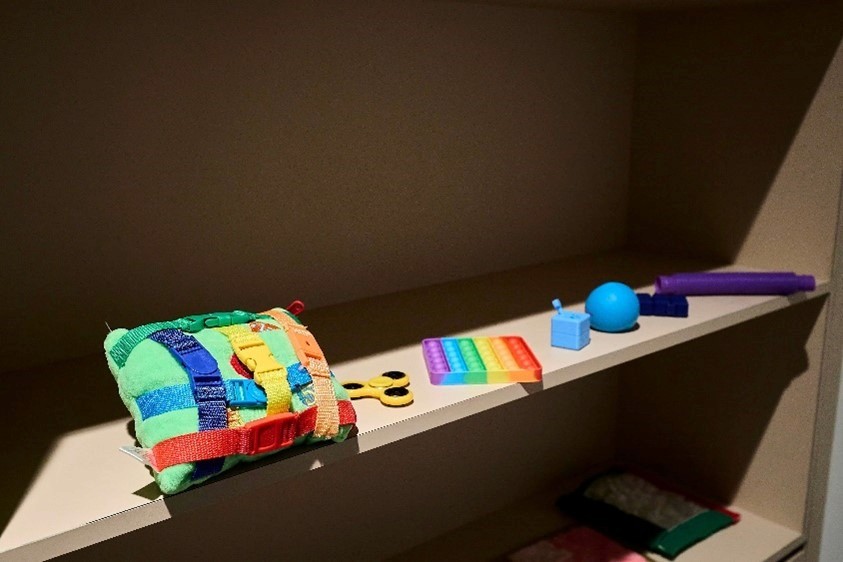
Sensory toys and regulation aids available at the Calm Pod are specifically selected to support comfort, focus, and emotional well-being for individuals experiencing sensory overload.
Borrow-n-Go. The team could not make a standard self-checkout kiosk comfortable for wheelchair users, no matter how they adjusted it, so they went back to the drawing board and adapted an existing RFID pilot into a passageway you walk or roll through with your books. Young children enjoy using it, and Keisha said it has encouraged them to borrow and read more books. The design young children enjoy only exists because the library worked out a system that made borrowing easy for wheelchair users.
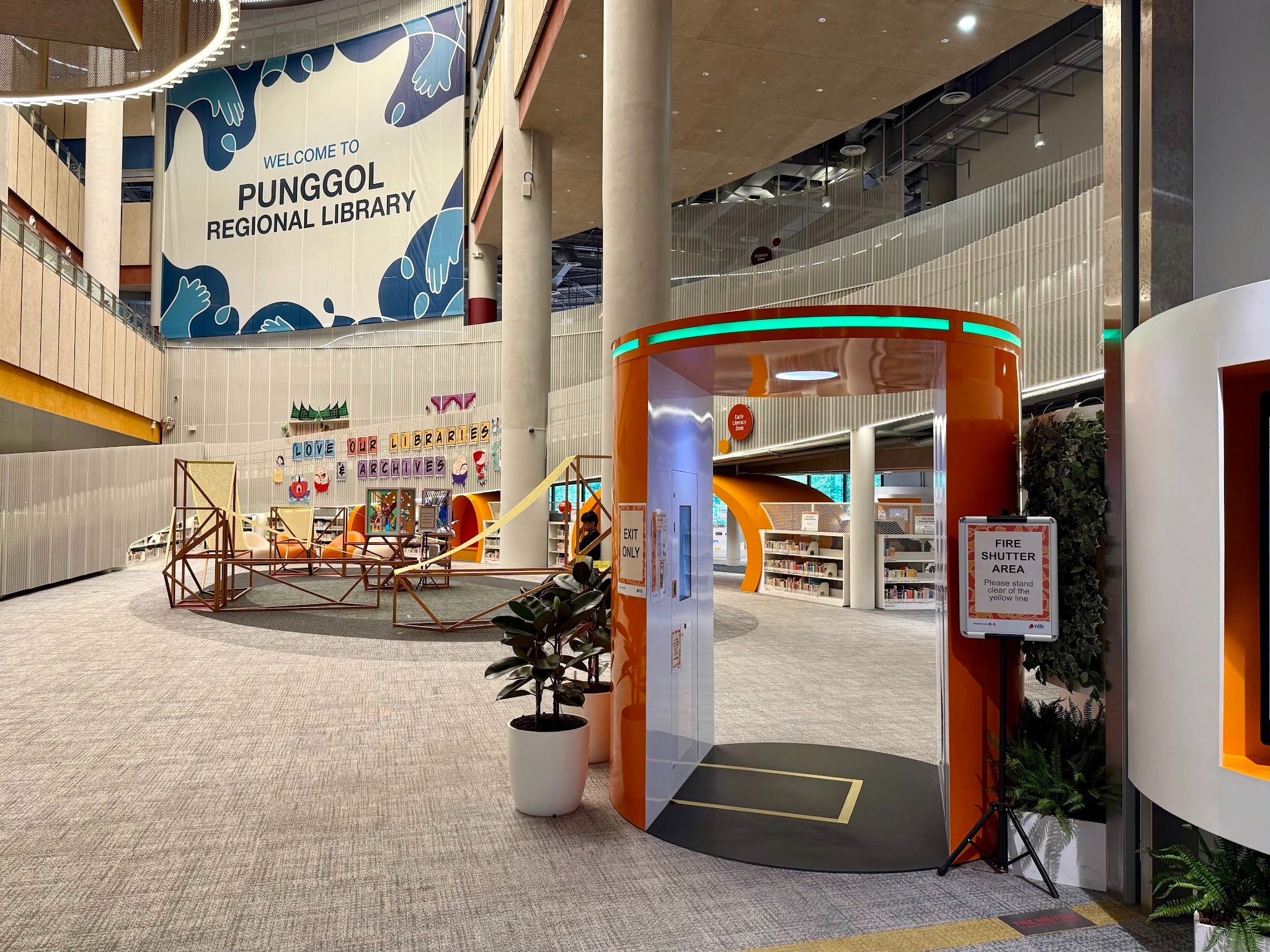
Borrow-n-Go allows patrons, especially wheelchair users and seniors, to walk through a dedicated passageway to borrow books automatically without placing them on a tabletop.
Magnifiers with text-to-speech functions. This is part of a set of assistive technology in the library for patrons with visual impairment, alongside keyboards with large, high-contrast keys. They come with easy-to-use controls to enlarge text size, and they can convert printed or digital text into spoken audio. Older patrons now use them for any small print, not limited to textbooks or newspapers.
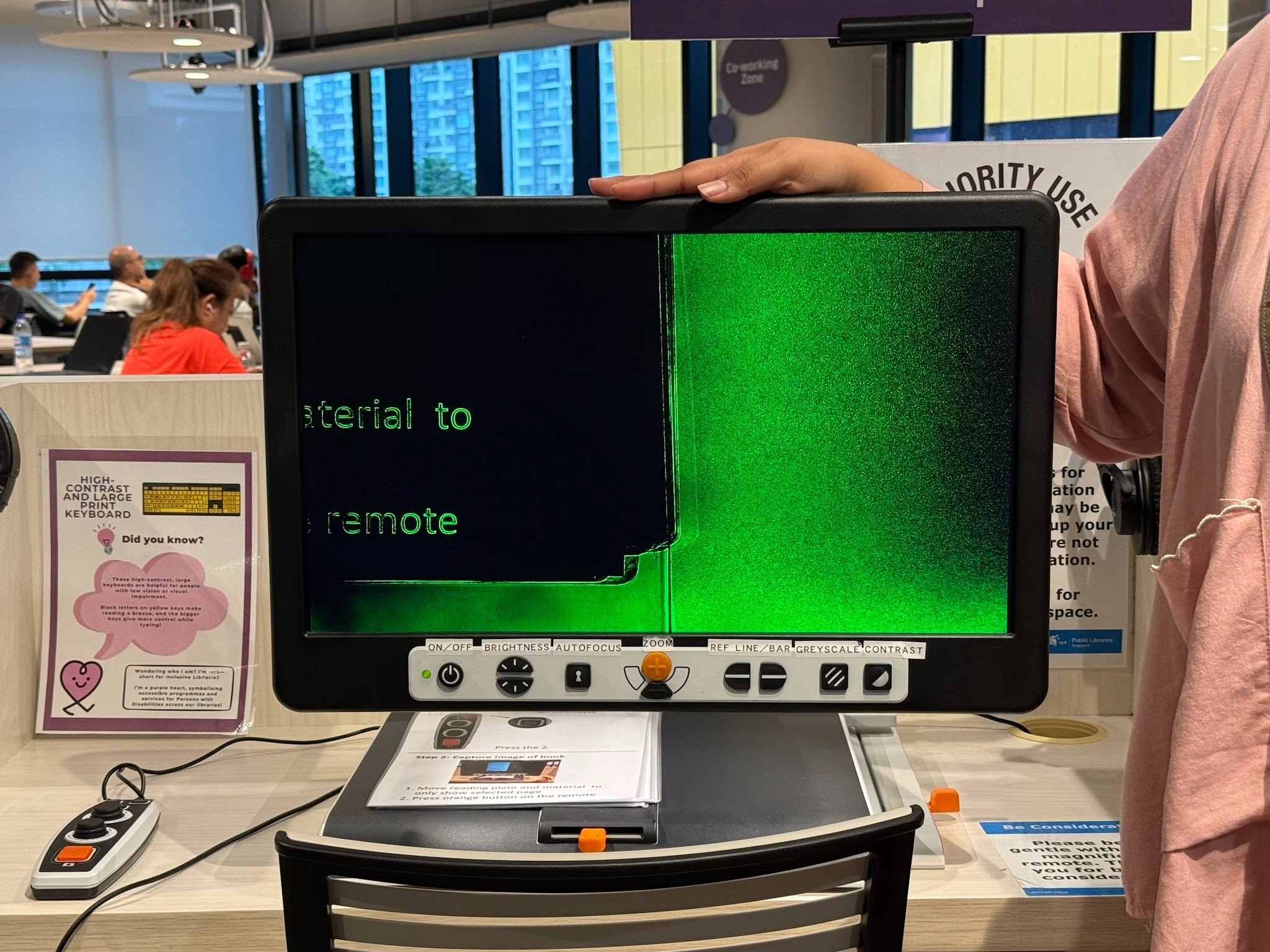
NLB provides magnifiers and advanced assistive technology across its libraries to support patrons with low vision or visual impairments
Lower bookshelves. Standard tall library shelving puts a good part of the collection out of reach of anyone seated, so the shelves here were set low enough for wheelchair users to browse on their own. The unplanned consequence was that sightlines across the floor opened up. Parents can keep an eye on their children while they browse, and patrons who are hard of hearing can pick up visual cues from the environment surrounding them.
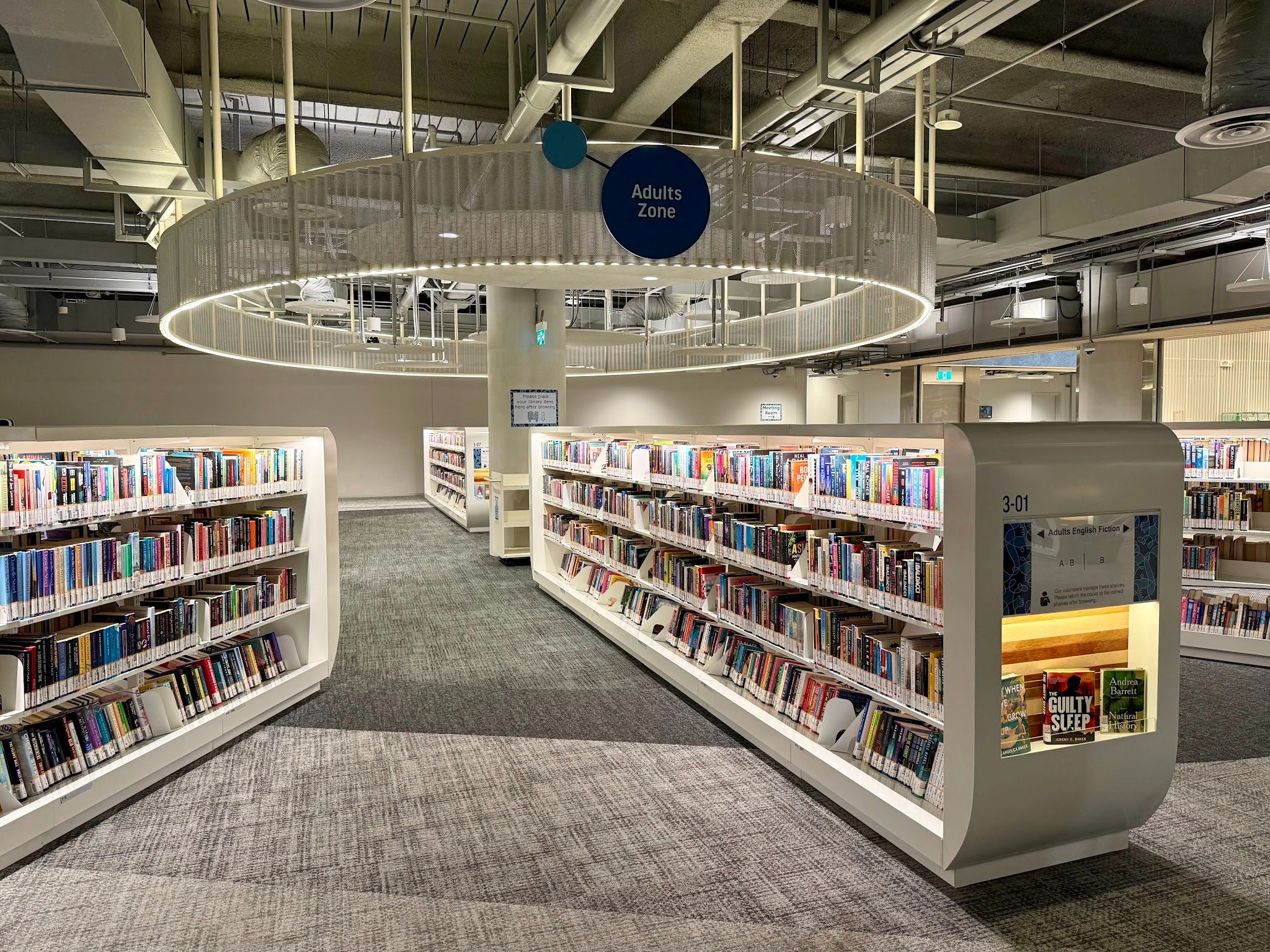
Lower bookshelves are intentionally designed to foster inclusivity and accessibility
Extra-wide gantries. All of the entry gantries were made wide enough for wheelchair users, families with large strollers and visitors with a range of mobility needs. This reminded me of a time when I had to lug so many bags, backpacks and suitcases of items and tools to prototype the Wheelchair Poncho at the MakeIT space on Level 4. With the extra-wide gantries I could enter the library in one go. I had been walking through those gantries for two months and never once wondered why they were that wide.
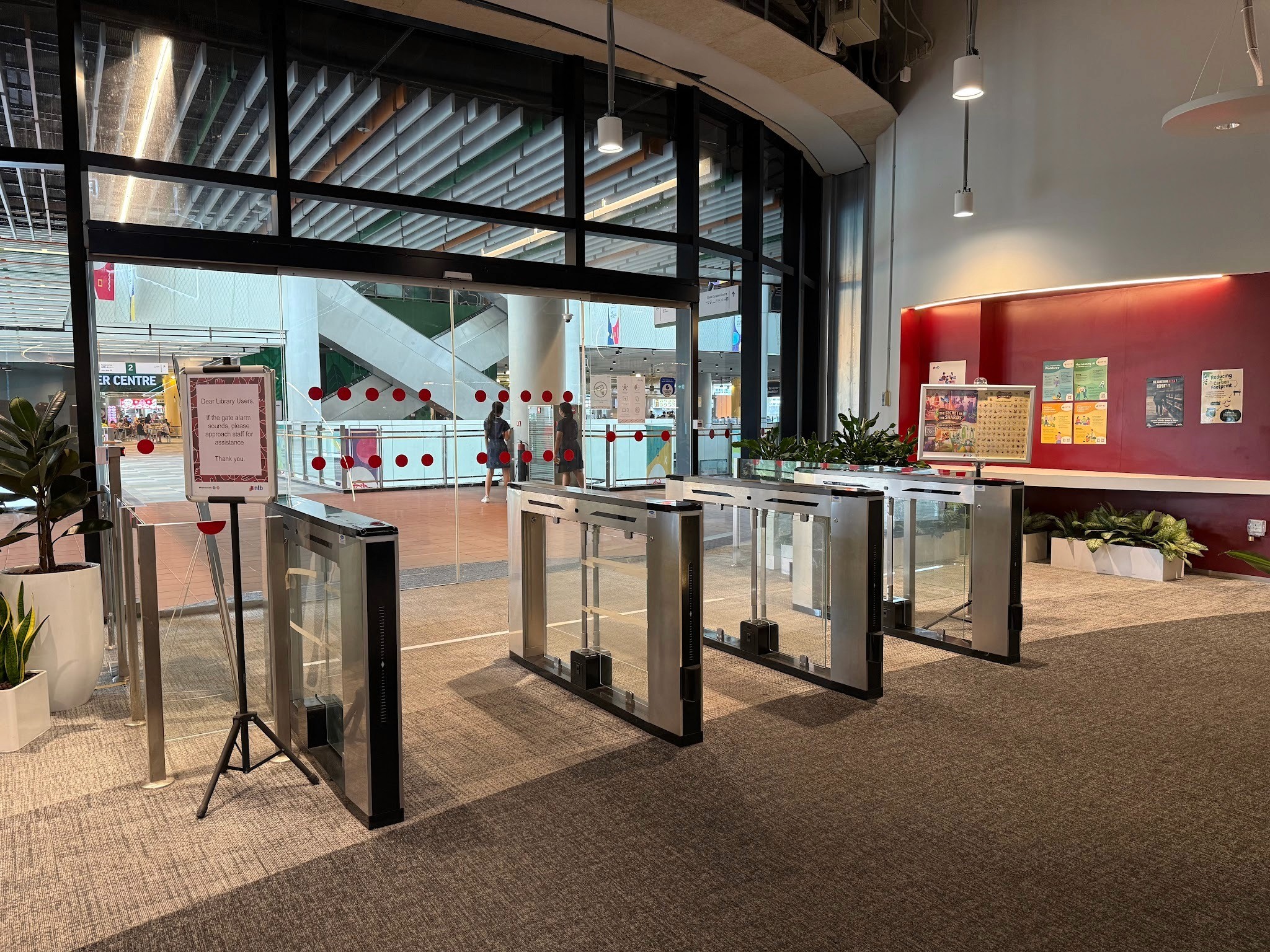
The extra-wide gantries in Punggol Library help wheelchair users and families with strollers enter the library with ease.
The benefits above came out of decisions made for unrelated reasons. They show that the wider benefit tends to appear when a team treats a small group's problem as a real design constraint rather than setting it aside because that group is not the majority.
The curb-cut effect beyond the building
What also struck me is that the curb-cut effect is not limited to on-site accessibility features. They are one part of a wider system. NLB publishes wheelchair-friendly bus and train routes to each branch, and a barrier-free route serves anyone pushing a pram, pulling luggage or getting around on a sprained ankle. Social Stories and Visual Schedules are step-by-step photo guides showing what to expect in specific library situations. They were made for autistic patrons, and because they work through photographs rather than text, they also help someone who reads little English, or a parent bringing a child to a library for the first time. Staff are trained to support patrons with disabilities, autistic patrons among them, and that same training makes them better at handling any distressed patron, including a child having a tantrum.
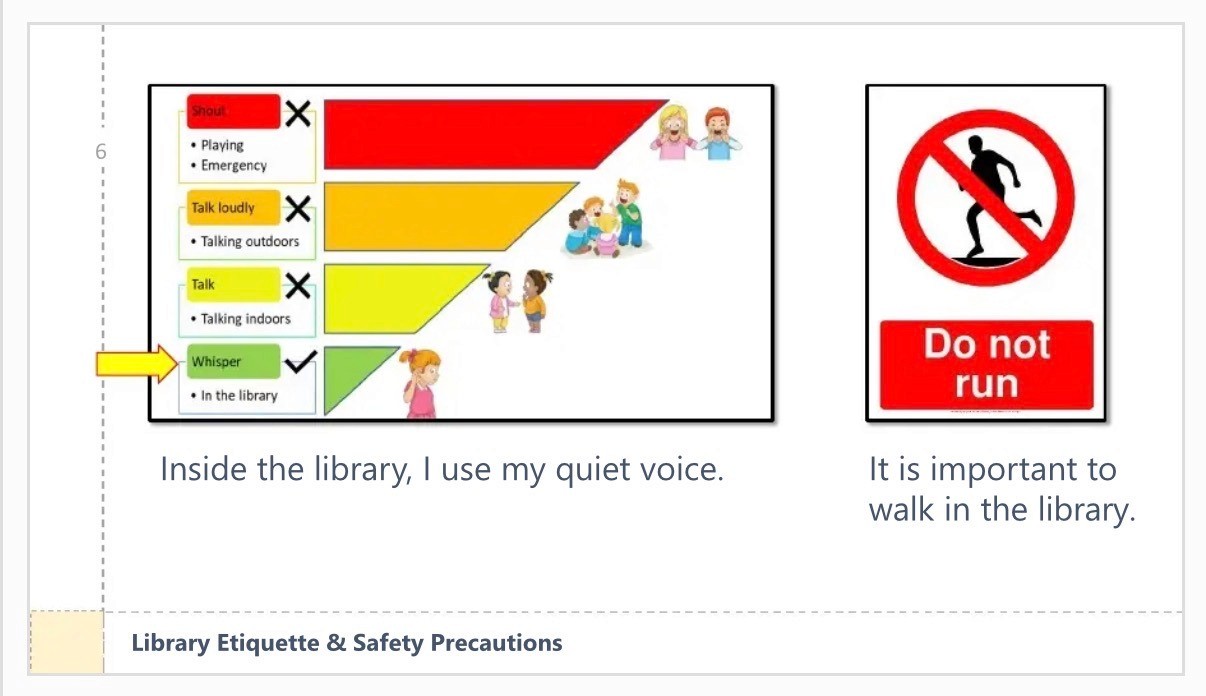
NLB’s Social Story is a step-by-step photograph guide designed to help persons with disabilities - particularly individuals on the autism spectrum - understand what to expect and how to navigate the library environment safely and comfortably.
The curb-cut effect should not be the only reason a feature gets built
While some of the features above benefit the whole population, the library also has parts of its inclusive system built specifically for patrons with disabilities. Accessible Membership, with its longer loan periods and higher limits, is open only to patrons who qualify through MSF-funded schemes or government-funded special education schools. Book-A-Tour offers one-to-one guided tours led by staff for patrons with disabilities. Inclusive hiring, from the MINDS Fernvale Gardens students who maintain the Toy Library each week to Artease on Level 2 employing persons with disabilities as full-time staff, benefits the people it employs. All of these serve a small, specific group of patrons and will never spread beyond it, and NLB prioritises them anyway. A feature that shows no curb-cut effect, or that only a handful of patrons use, should not be counted as a failure. Low usage is not evidence that the work was not worth the effort, cost and time.
The curb-cut effect is a powerful and practical business case for accessibility, but it must NOT be the test a feature has to pass before it gets built. Equal access is a basic human need regardless of ability, and it is alright if much of the work that delivers it will only ever serve the people it was built for.
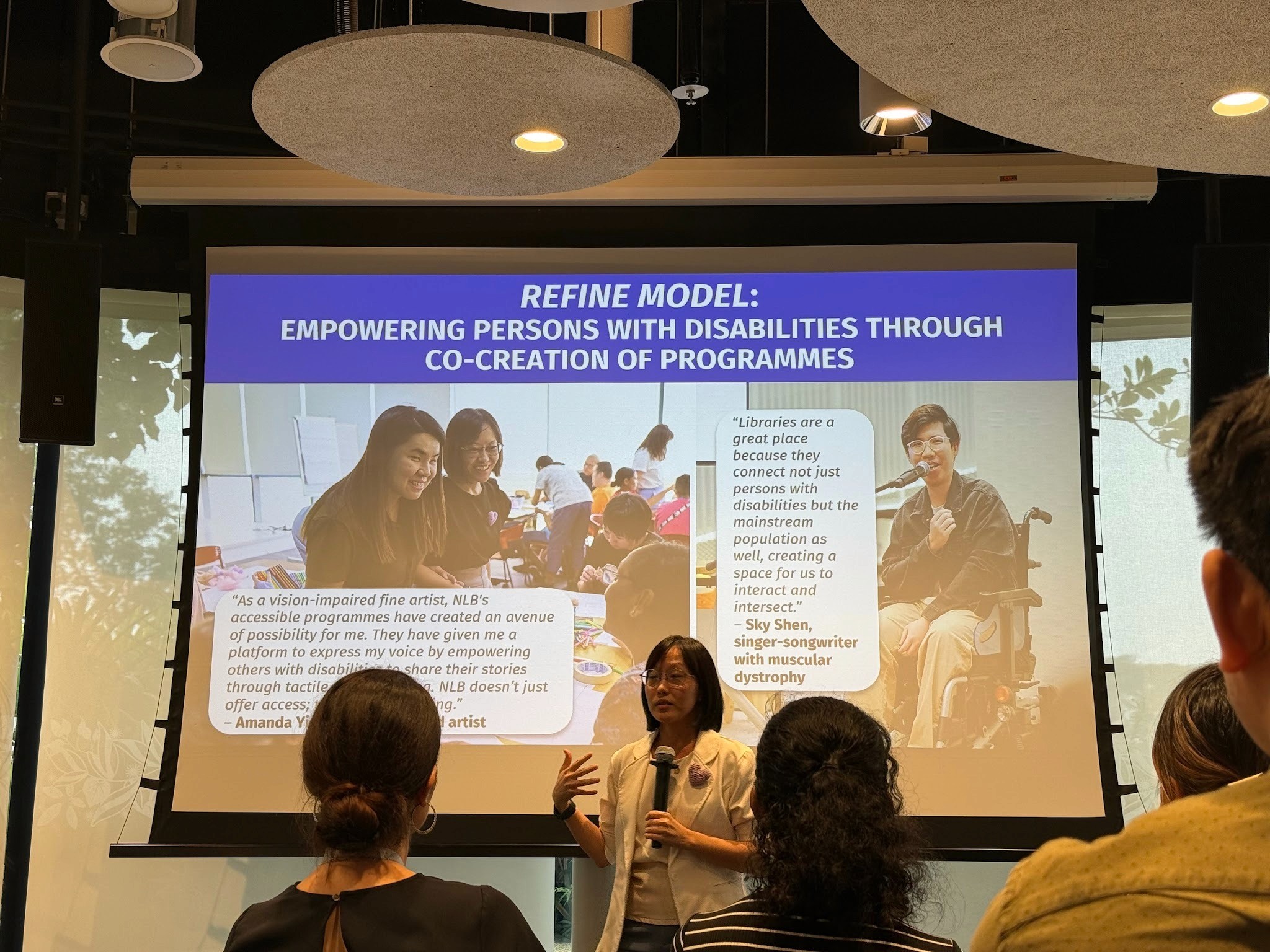
Yvonne Ng, Deputy Director of NLB’s Equaliser Office, explaining how the library empowers persons with disabilities through co-creation programmes.
Special thanks to Yvonne and Keisha from NLB's Equaliser Office, who showed us around. Punggol Regional Library is at One Punggol, 1 Punggol Drive, Singapore 828629, and opens daily from 10am to 9pm.
Do you
like
Share it with your friends!
https://55mins.com/blog/what-a-tour-of-punggol-regional-library-taught-me-about-the-curb-cut-effect
Copy link
Copied